
Congee (Chinese Rice Porridge)

It’s the perfect blend of warmth and comfort — all in a bowl.
Serves4
Makesabout 6 cups
Prep10 minutes
Cook35 minutes to 40 minutes
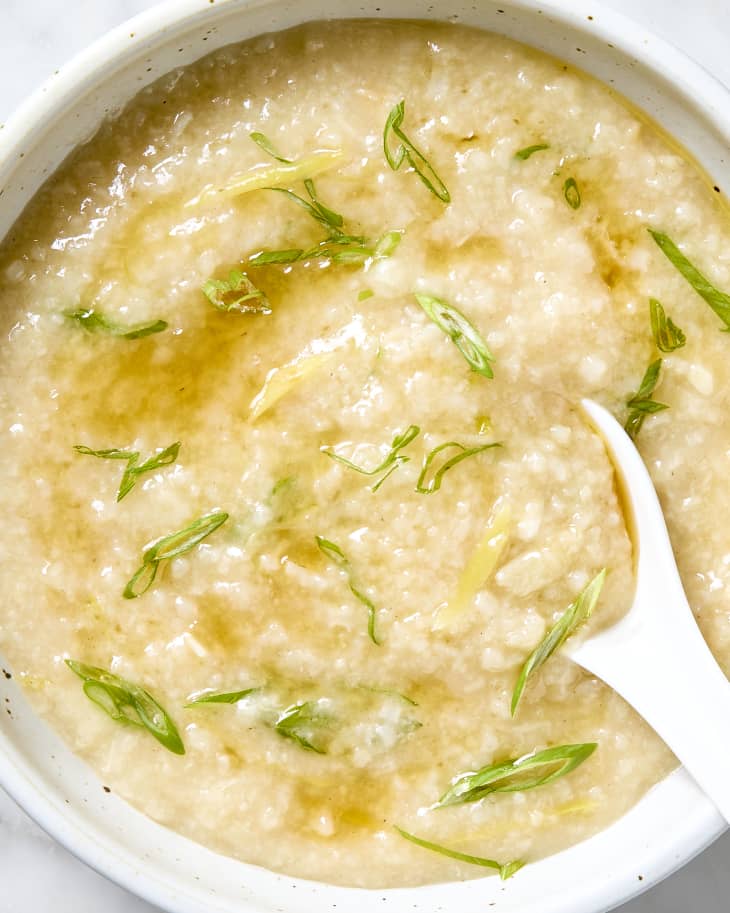
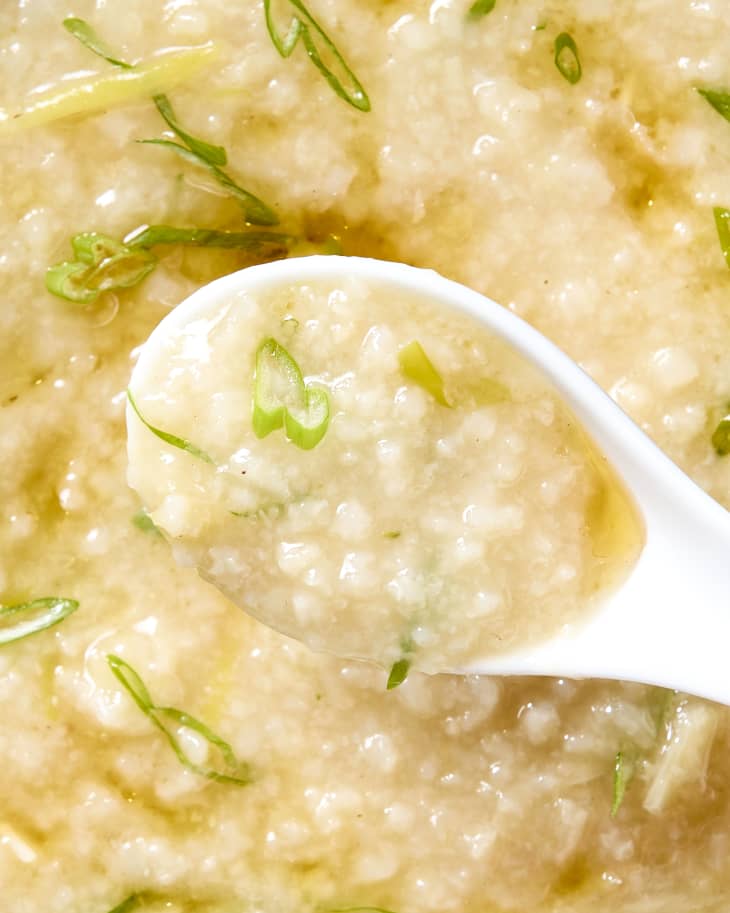
When I was a kid, I’d eat congee almost every other day. Congee is a traditional Chinese porridge made from boiling rice in a large amount of water for a long time. As it cooks, the rice releases its starch, which thickens it up into a porridge, and becomes soft, silky, and creamy. It’s usually eaten for breakfast, as a late dinner, or as a fill-in for a side of cooked white rice at any meal.
In our Chinese American household, my parents would cook an immense amount of food for dinner, which led to an equally immense amount of leftovers. No matter what, my mom would make congee the next day. Although congee is usually topped with meat, fish, preserved vegetables, and various other toppings, I topped my congee with a mountain of rou song (Chinese meat floss) and whatever leftovers there were before diving right in.
This classic recipe takes less than an hour to make from start to finish. Here’s how to easily make your own perfect bowl of warm, comforting congee.
Key Ingredients in Congee
- Rice: There’s really only one thing you need to make congee: white rice. I usually use medium-grain white rice, but any kind of rice can be turned into congee. (My parents would even use already cooked rice from the day before and it’d always turn into delicious congee.)
- Toppings: This basic recipe keeps things simple with sliced scallion greens and a drizzle of toasted sesame oil. But the beautiful thing about congee is that it’s really a blank canvas in terms of how you choose to flavor it (you can see how I topped my Christmas congee!). You can add pork floss, reheated leftovers, or whatever you desire.
How to Make Congee
- Wash the rice. White rice will always have some starch on the outside of each grain. Washing it off leads to a silkier, creamier congee. If you don’t properly wash your rice, your congee could become really slimy and sticky, which won’t get you the same light mouthfeel that properly cooked congee has.
- Boil the rice in a good amount of water. I do one cup of rice to eight cups of water, but everyone has a different ratio that they use. Simmer until the rice is plump and tender, and the congee has thickened up considerably.
How to Store and Reheat Leftover Congee
If you have any congee leftovers, you can store it in any airtight container. It can be frozen for a month max, or refrigerated for around five days. When reheating, you’ll need to thaw it first if it’s frozen.
To reheat, you can warm it up in the microwave or on the stovetop. If it’s thickened up considerably, just add some water (a quarter cup at a time) and stir until you reach your desired thickness. It’ll be just like new!
Basic Congee Recipe (Chinese Rice Porridge)
It’s the perfect blend of warmth and comfort — all in a bowl.
Prep time 10 minutes
Cook time 35 minutes to 40 minutes
Makes about 6 cups
Serves 4
Nutritional Info
Ingredients
- 1 cup
medium or long-grain white rice
- 8 cups
water
- 1 (1-inch) piece
ginger
- 3 cloves
garlic
- 2
medium scallions
- 1 tablespoon
soy sauce or tamari
- 1 1/2 teaspoons
kosher salt, plus more as needed
- 1 teapoon
toasted sesame oil, plus more for drizzling
- 1/2 teaspoon
ground white pepper
Instructions
Place 1 cup white rice in a fine-mesh strainer and rinse under cold water until the water runs mostly clear. Place the rice in a large saucepan and add 8 cups water. Bring to a boil over medium-high heat.
Meanwhile, peel and thinly slice a 1-inch piece of ginger. Thinly slice 3 garlic cloves. Thinly slice 2 medium scallions on a slight diagonal, keeping the white and green parts separate. Reserve the green parts for garnish.
When the congee is boiling, reduce the heat as needed to maintain a brisk simmer. Add the ginger, garlic, and scallion whites. Stir to combine. Simmer uncovered, stirring occasionally and making sure to scrape to the bottom of the saucepan, until very creamy and thickened, 30 to 35 minutes.
When the congee is ready, add 1 tablespoon soy sauce or tamari, 1 1/2 teaspoons kosher salt, 1 teaspoon toasted sesame oil, and 1/2 teaspoon ground white pepper. Stir to combine. Taste and season with more kosher salt as needed. Serve topped with the reserved scallion greens and a drizzle of toasted sesame oil.
Recipe Notes
Storage: The congee can be refrigerated in an airtight container for up to 5 days. Reheat congee over medium-low heat, and add a splash of water to thin out if too thick.
A version of this recipe was first published on February 2016 by Emma Christensen.