
How To Make Sourdough Starter from Scratch

Making a fresh batch of starter is as easy as stirring together some flour and water and letting it sit.
Makes4 cups
Not all of us are so lucky to have a sourdough starter passed down to us from our bread-baking forefathers and foremothers. Thankfully, making a fresh batch of starter is as easy as stirring together some flour and water and letting it sit. That’s right!
No expensive heirloom starters, mashed-up grapes, or mysterious rituals required — just flour, water, and a little bit of patience. Here is how to make your own sourdough starter from scratch. Easy-peasy.
Tips For Making Sourdough Starter
- “Feed” the starter with equal amounts of fresh flour and water, a 1:1 ratio.
- Know when the starter is ready — it gets bubbly and billowy.
- Use all-purpose flour to keep a healthy starter.
- Place the starter in a container with a consistent room temperature of 70°F to 75°F.
What is Wild Yeast?
Before you get started, let’s talk about wild yeast, which is the key to a sourdough starter.
Before we had active-dry yeast or instant yeast, we had wild yeast. Actually, we still have wild yeast. It lives everywhere — in the air, in a bag of flour, on the surface of grapes. Domesticated commercial yeast replaced wild yeast for most baking because it’s easier for companies to mass produce, it’s easier for bakers to store and use, and it proofs our breads and pastries in a fraction of the time.
By contrast, wild yeast can be fussy and finicky. It needs a medium, a sourdough starter, in order to be useful to bakers. This medium has to be constantly maintained and monitored. Wild yeast also likes cooler temperatures, acidic environments, and works much more slowly to proof breads.
So why bother? Because wild yeast is amazing stuff! The flavor and texture we can get from breads and other baked goods made with wild yeast are no contest to breads made with commercial yeast — the flavors are more complex and interesting, the texture is sturdier and more enjoyable to chew.
What is a Sourdough Starter?
A sourdough starter is how we cultivate the wild yeast in a form that we can use for baking. Since wild yeast are present in all flour, the easiest way to make a starter is simply by combining flour and water and letting it sit for several days.
You don’t need any fancy ingredients to “capture” the wild yeast or get it going — it’s already there in the flour. (Also, the yeast adapts to whatever environment it is in. So even if your cousin in San Francisco gives you some sourdough starter, it will eventually no longer be true San Francisco sourdough, but rather New York sourdough or Austin sourdough or London sourdough.)
After a day or two, bubbles will start to form in the starter, indicating that the wild yeast is starting to become active and multiply. To keep the yeast happy, we feed the starter with fresh flour and water over the next several days, until the starter is bubbly and billowy. Once it reaches that frothy, billowy stage, the starter is ready to be used.
Using Whole-Grain Flours to Make a Starter
This recipe uses regular, everyday all-purpose flour, but you can certainly make sourdough using whole-wheat, rye, or any other kind of flour. Wild yeast is everywhere, after all!
If this is your first time making sourdough, I’d recommend starting with all-purpose flour because it tends to behave the most predictably. If you’re feeling ready to branch out, just start feeding the starter with whatever whole-grain flour you would like to use for baking.
Personally, I keep a constant batch of all-purpose sourdough starter in my kitchen, and if I want to make a rye starter or a whole-wheat starter, I scoop 1/4 cup from my all-purpose starter and use that as the seed for a new starter with the whole-grain flour.
How to Use This Starter in Bread Recipes
This starter uses equal parts flour and water, a 1:1 ratio, which I find to be the most versatile for baking. To use this starter in any recipe, take a look at the ratio of flour and water the recipe is calling for in their starter. Next time you feed your starter, just feed it the ratio of water and flour called for in the recipe. If you want to stick more closely to the recipe’s sourdough, just scoop out 1/4 cup of your starter and feed it with the ingredients called for in your recipe’s starter.
Once you’re done with your recipe, go back to feeding your starter equal parts flour and water.
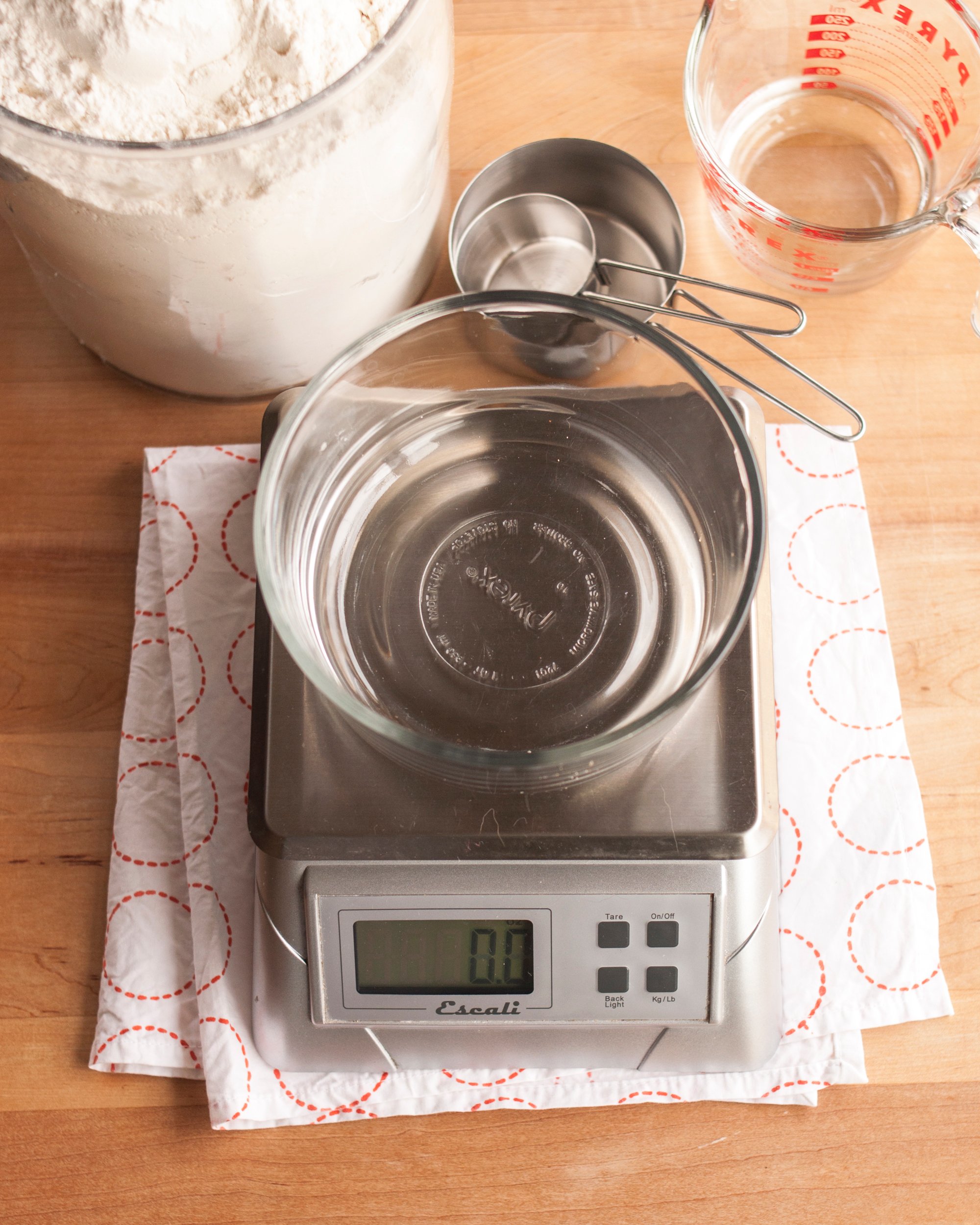
DAY 1: Use a 2-quart glass or plastic container for your starter. Use a scale to weigh the flour and water if at all possible. 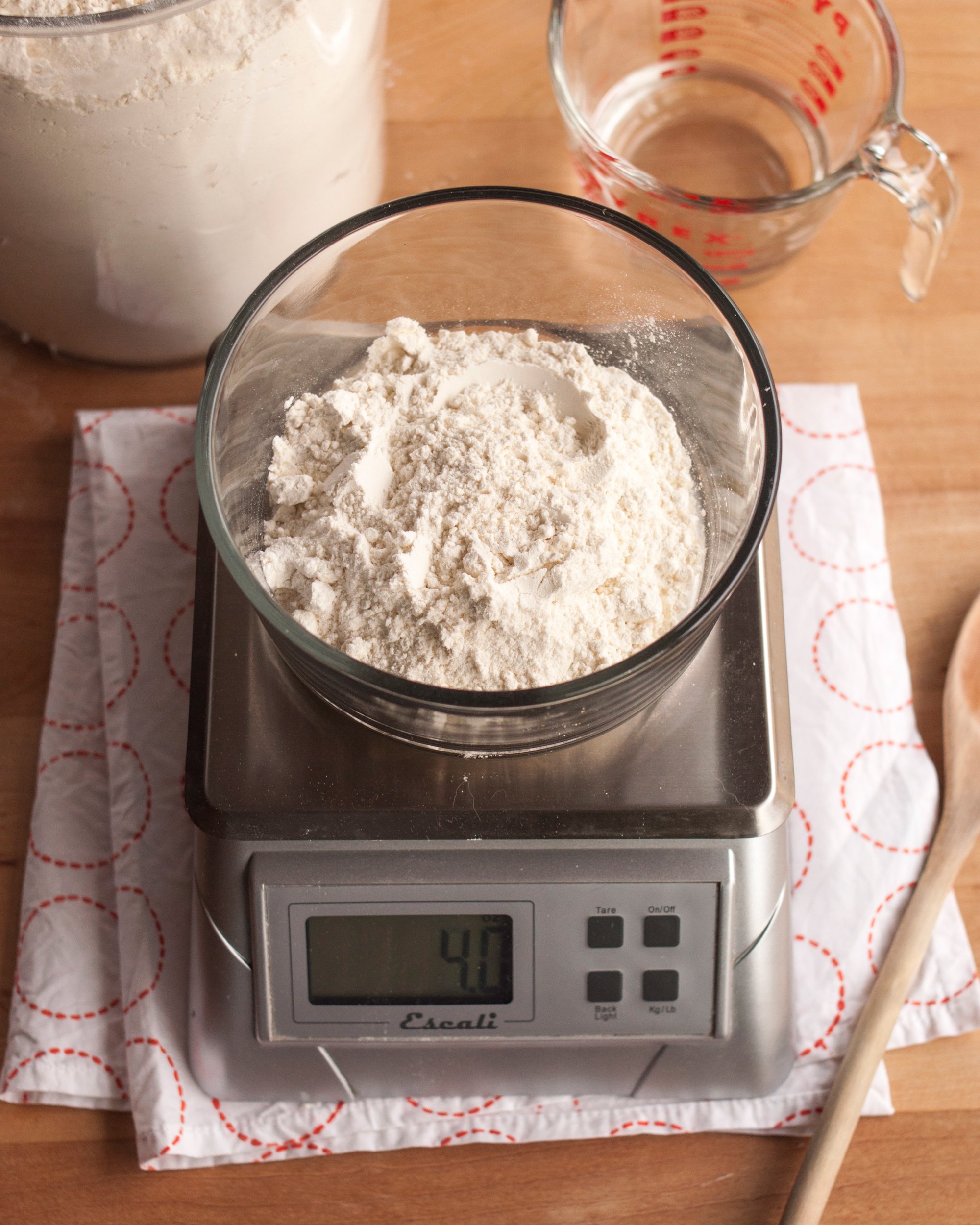
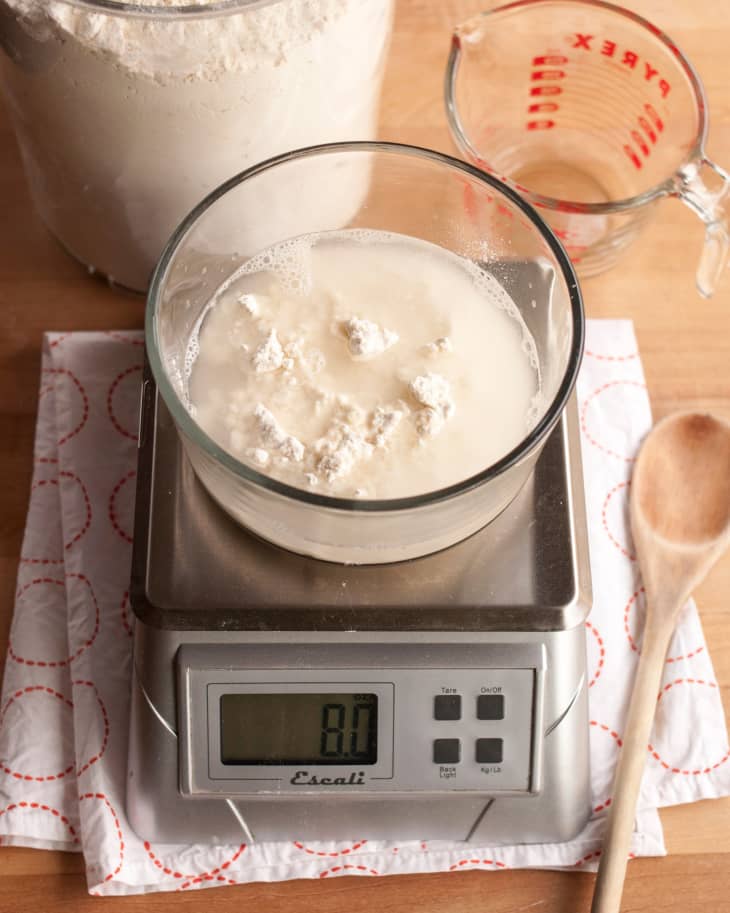
Weigh 4 ounces (3/4 cup + 2 tablespoons) all-purpose flour. 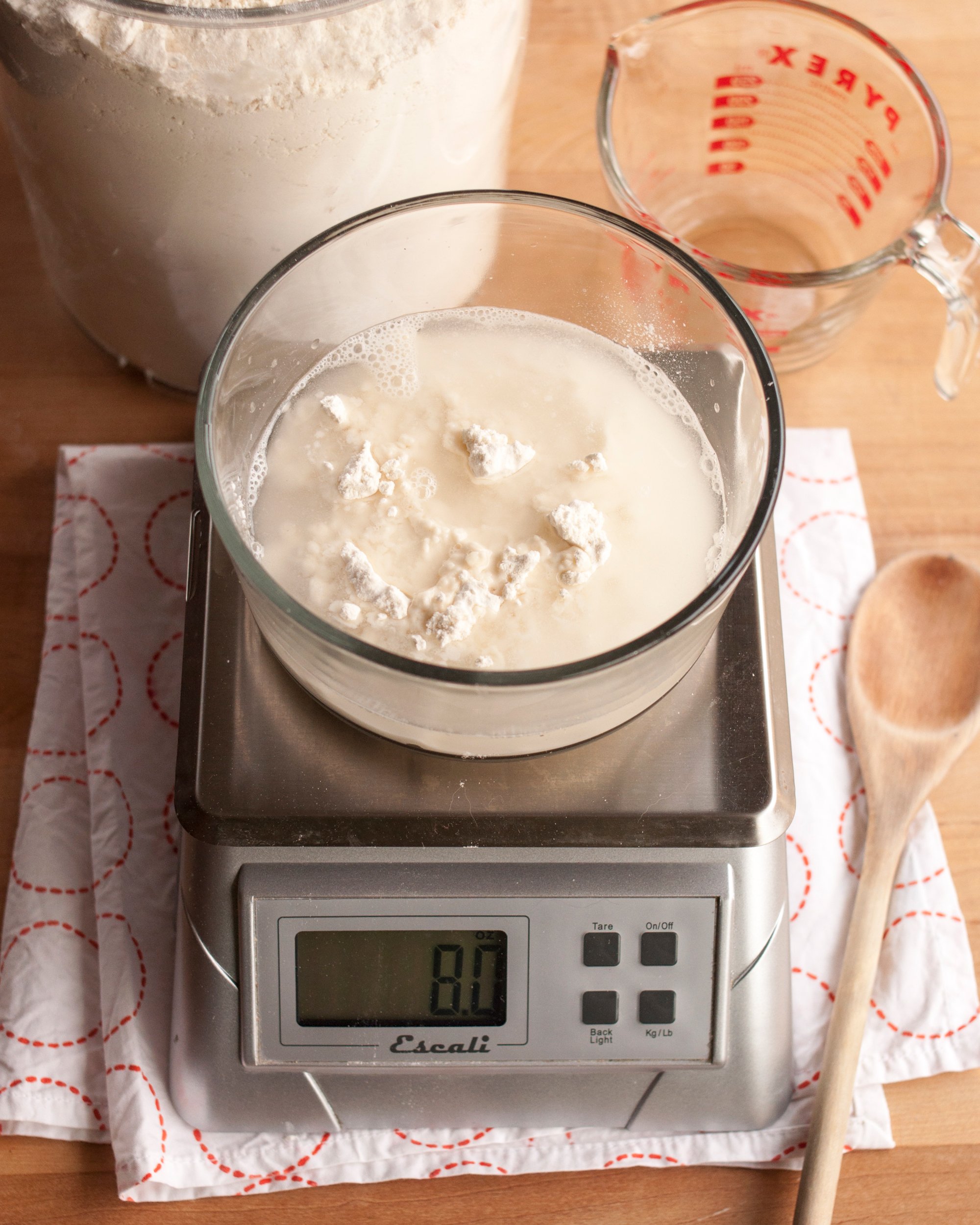
Weigh 4 ounces (1/2 cup) water. 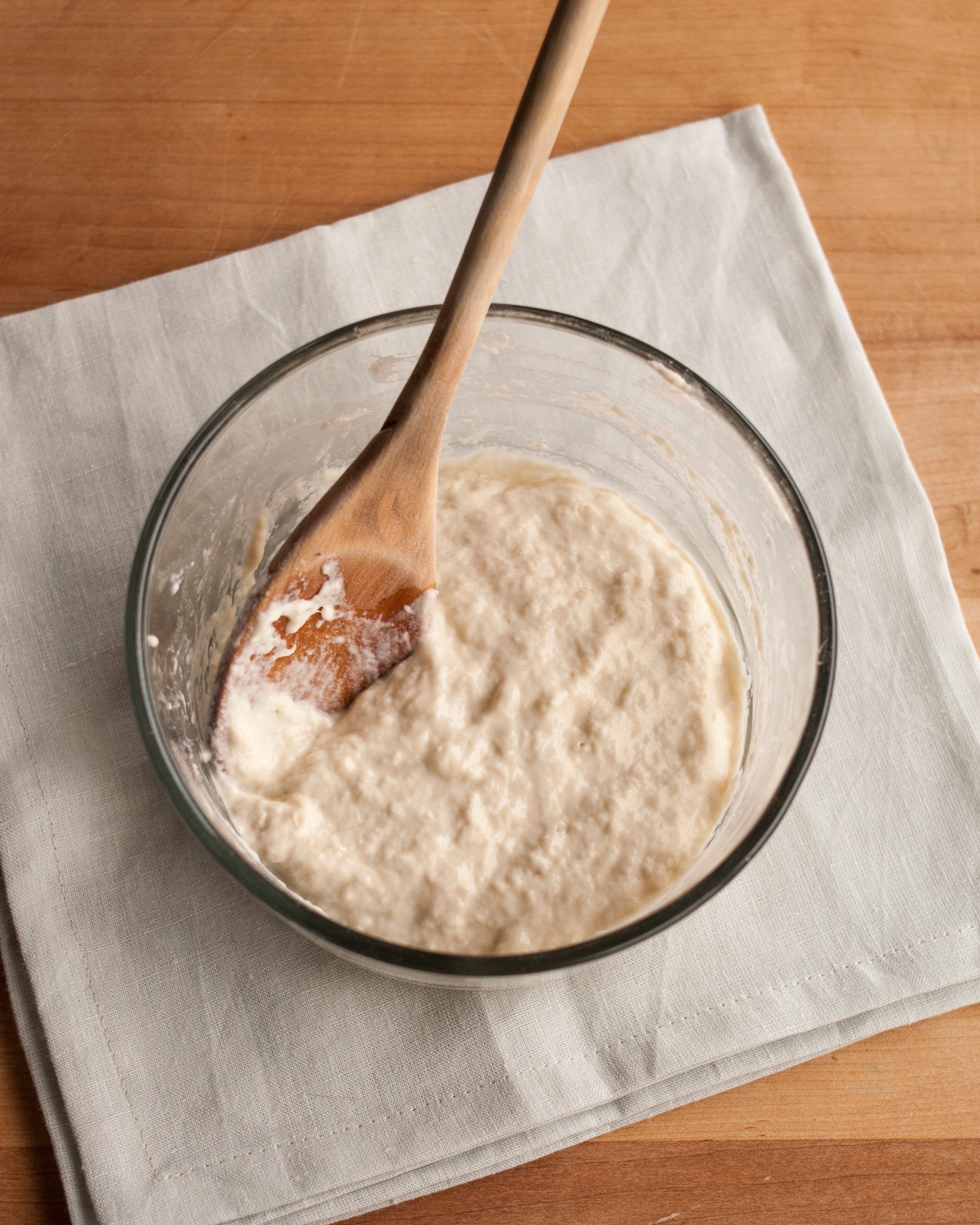
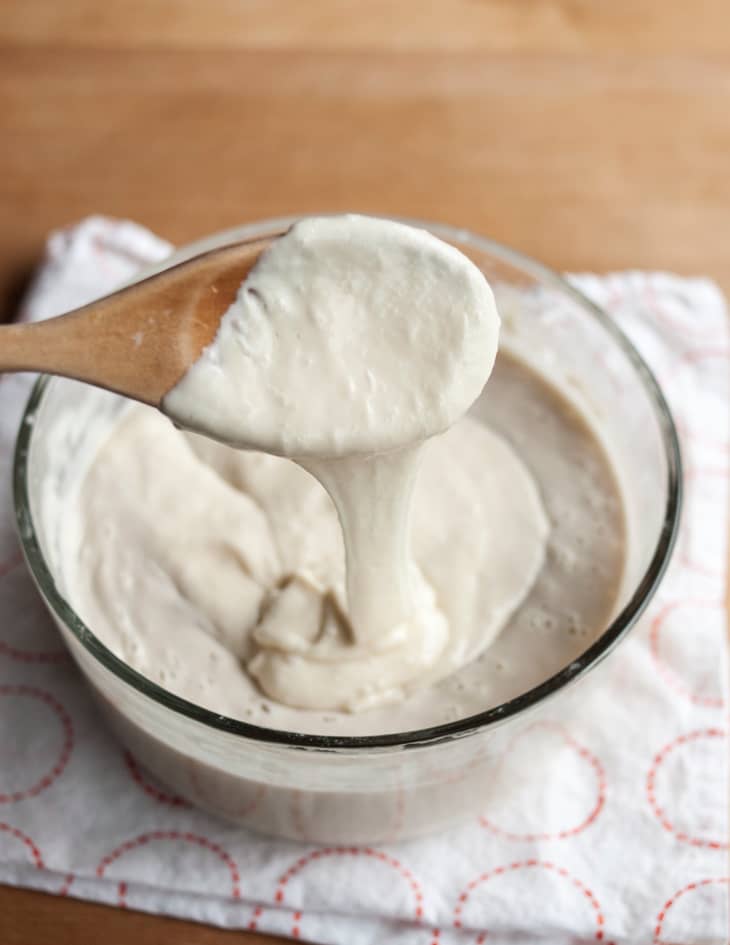
Stir the water and flour vigorously until combined into a smooth batter. It will look like a sticky, thick dough. 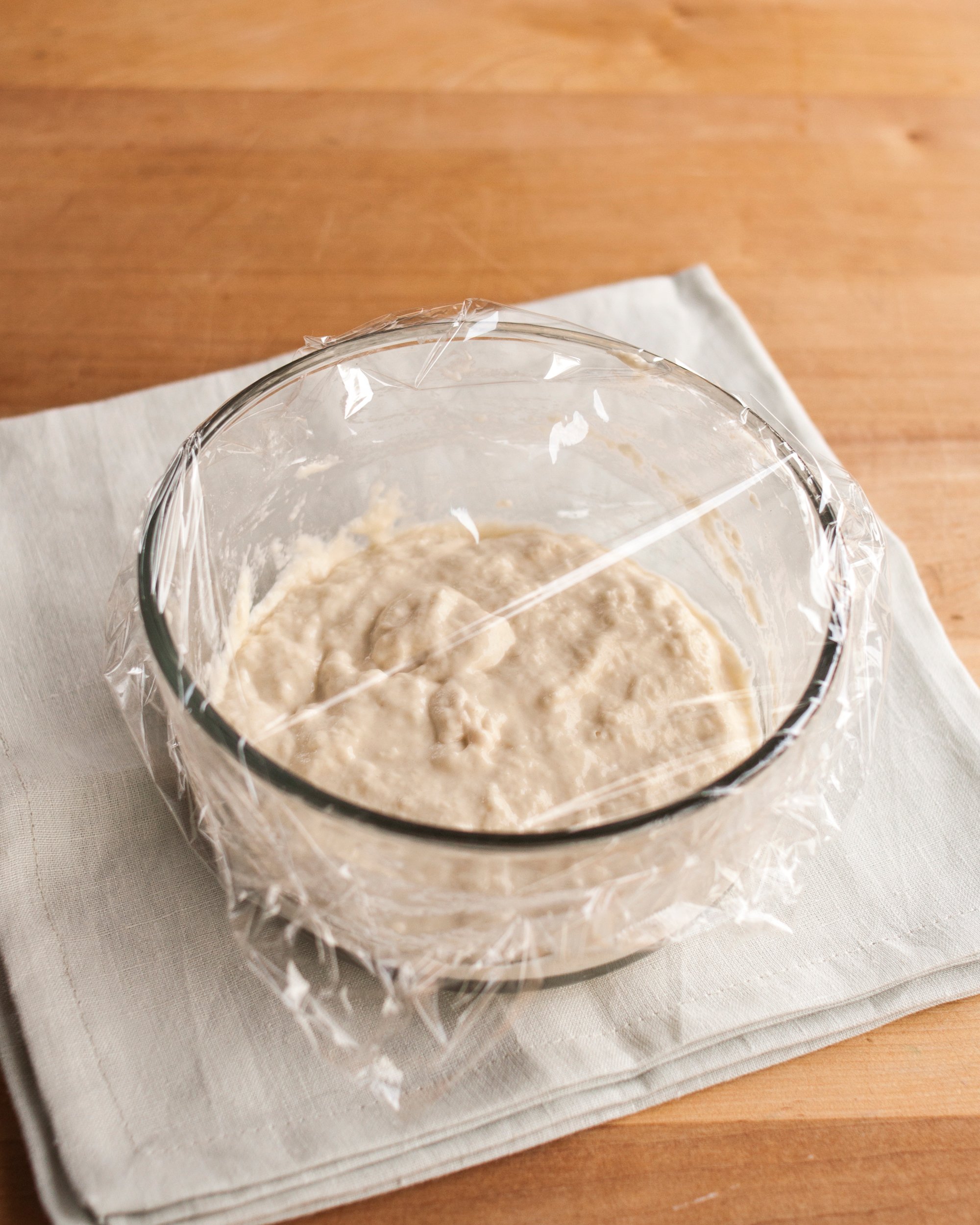
Scrape down the sides and loosely cover the container with plastic wrap or a clean kitchen towel secured with a rubber band. Place the container somewhere with a consistent room temperature of 70°F to 75°F (like the top of the refrigerator) and let sit for 24 hours. 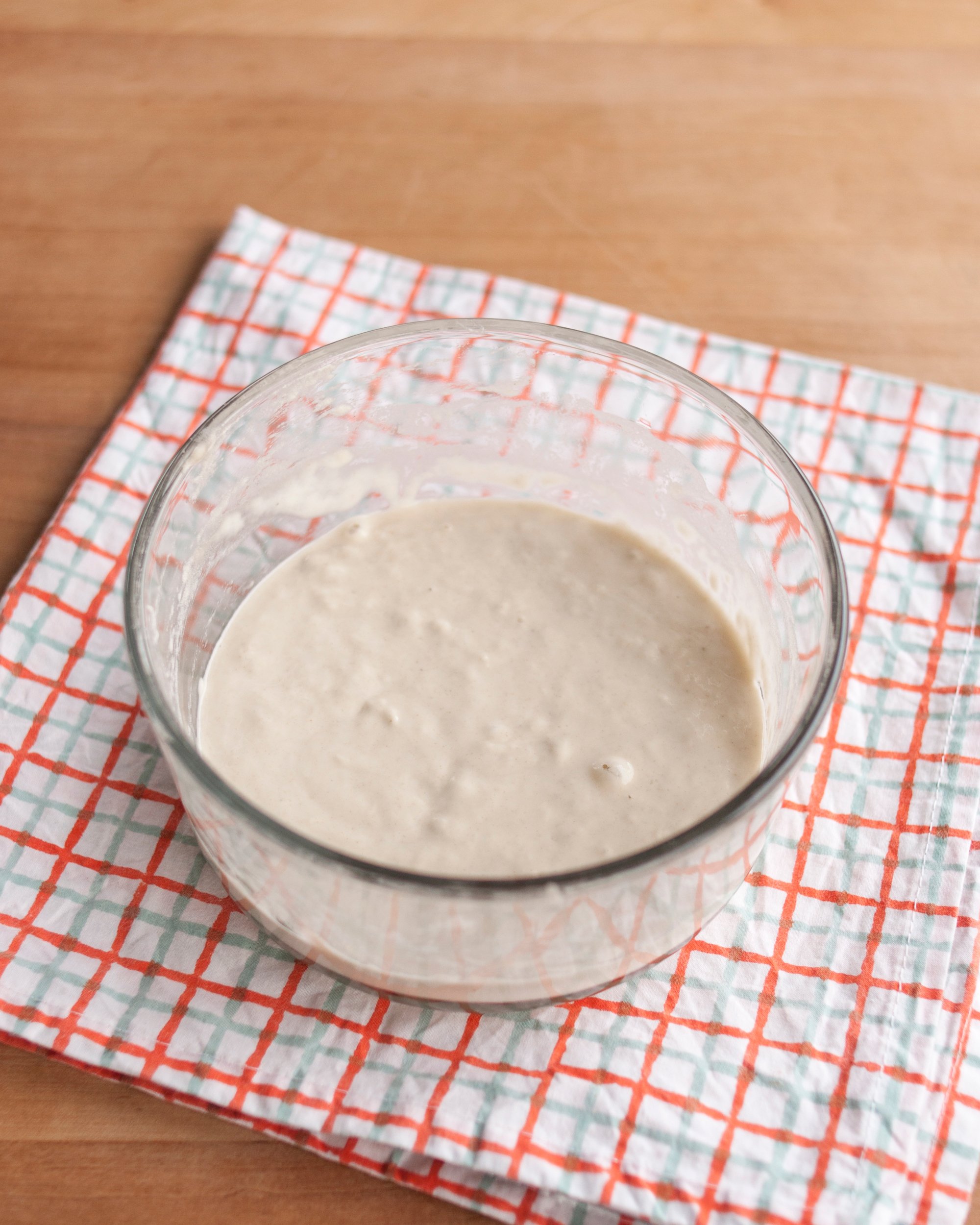
DAY 2: The next day, you may see a few bubbles here and there, but don’t worry if you don’t. Weigh the flour and water for today, and add them to the starter. Stir vigorously until combined into a smooth batter. It will look like a sticky, thick dough. Scrape down the sides and loosely cover the container with the plastic wrap or kitchen towel secured again. Place the container somewhere with a consistent room temperature of 70°F to 75°F (like the top of the refrigerator) and let sit for 24 hours. 
DAY 3: By now, the surface of your starter should look dotted with bubbles and your starter should look visibly larger in volume. If you stir the starter, it will still feel thick and batter-like, but you’ll hear bubbles popping. It should also start smelling a little sour and musty. Weigh the flour and water for today, and add them to the starter. Stir vigorously until combined into a smooth batter. It will look like a sticky, thick dough. Scrape down the sides and loosely cover the container with the plastic wrap or kitchen towel secured again. Place the container somewhere with a consistent room temperature of 70°F to 75°F (like the top of the refrigerator) and let sit for 24 hours. 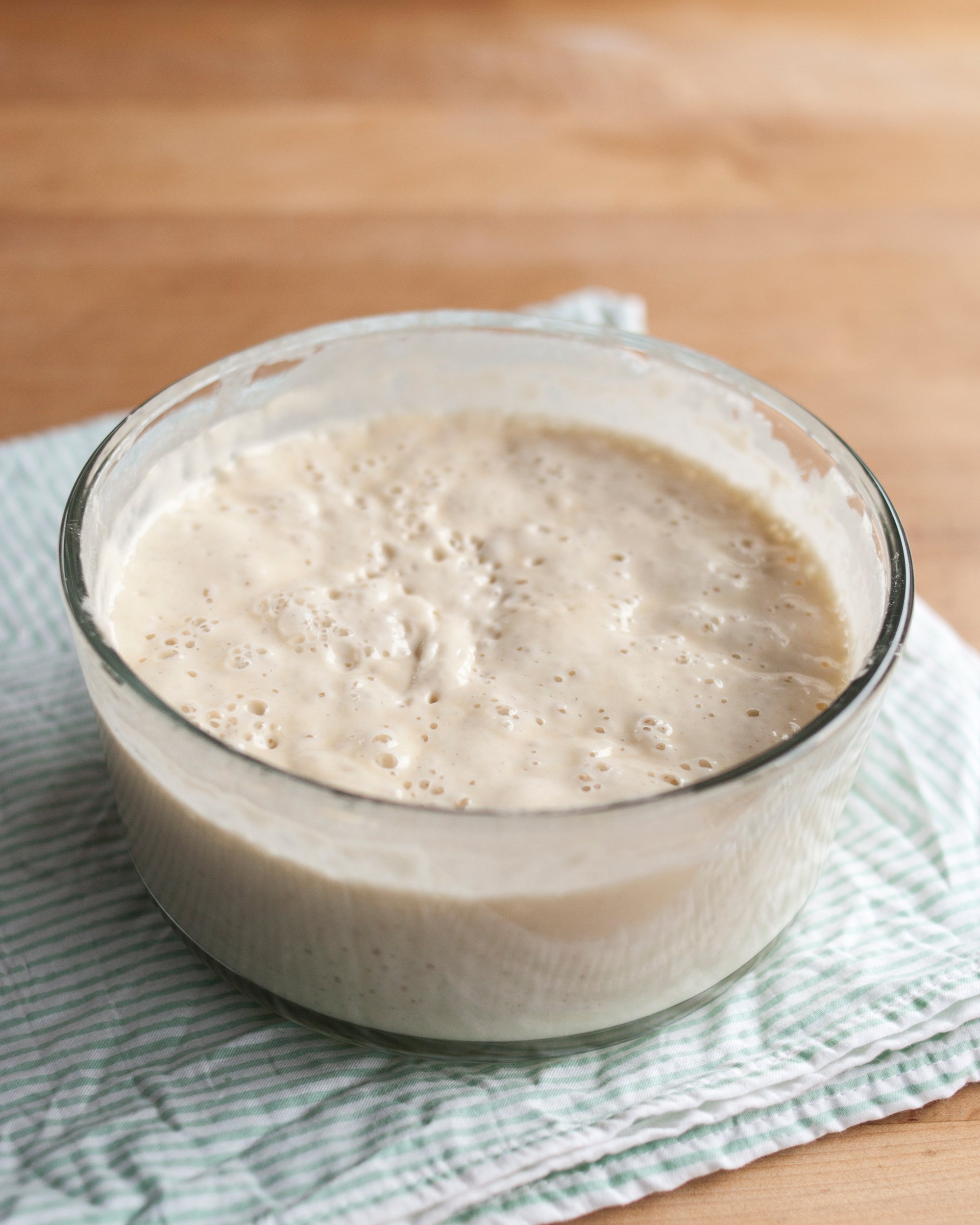
DAY 4: By now, the starter should be looking very bubbly with large and small bubbles, and it will have doubled in volume. If you stir the starter, it will feel looser than yesterday and honeycombed with bubbles. It should also be smelling quite sour and pungent. (My starter looks smaller in volume because it rose and fell during the night. Weigh the flour and water for today, and add them to the starter. Stir vigorously until combined into a smooth batter. It will look like a sticky, thick dough. Scrape down the sides and loosely cover the container with the plastic wrap or kitchen towel secured again. Place the container somewhere with a consistent room temperature of 70°F to 75°F (like the top of the refrigerator) and let sit for 24 hours. 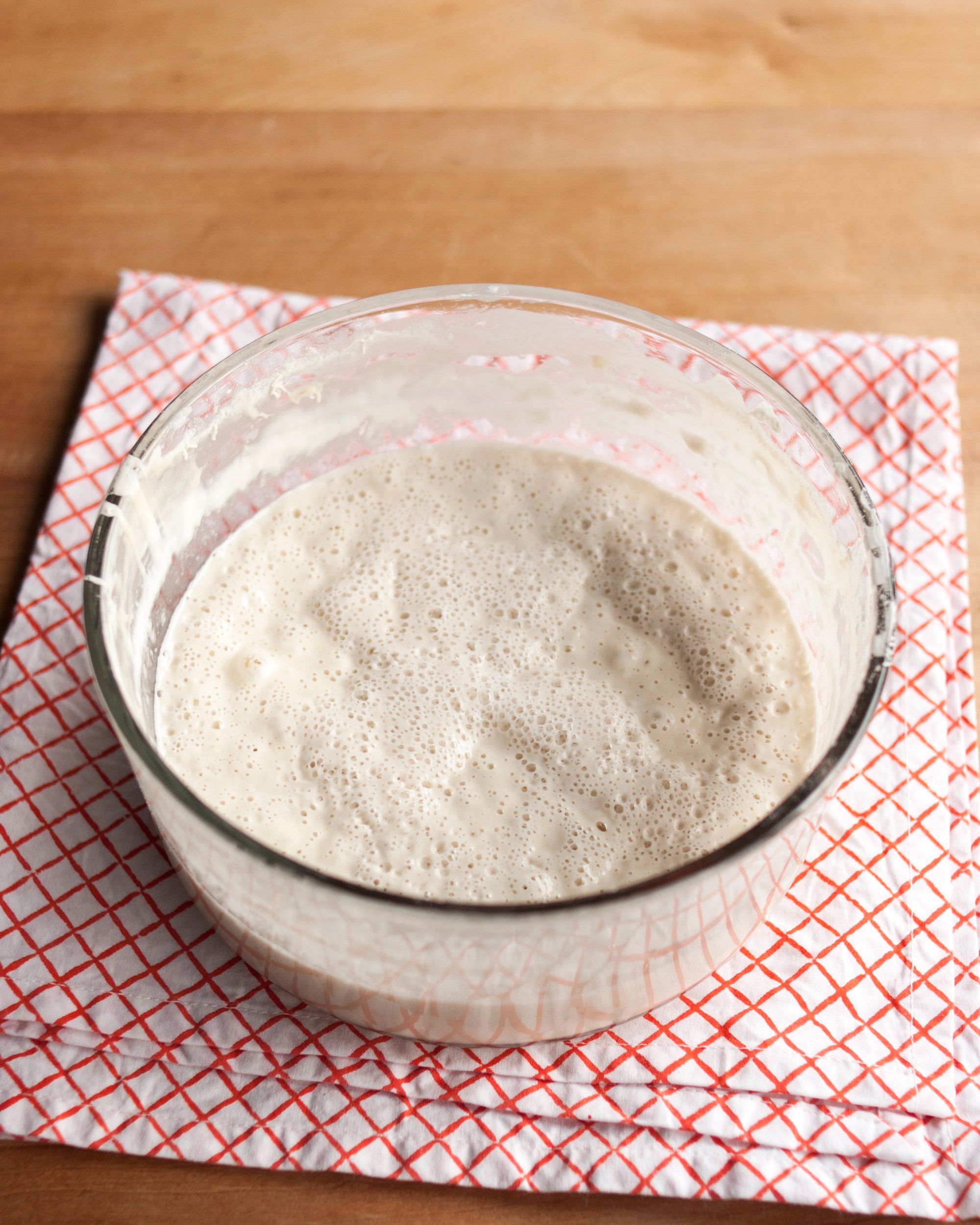
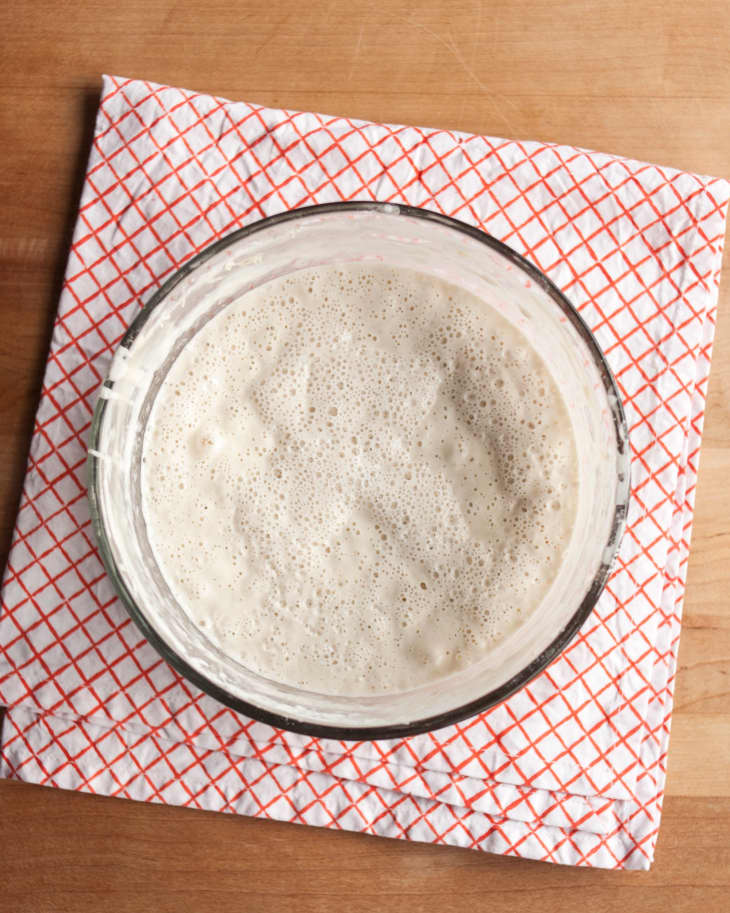
DAY 5 (or 6): Your starter is ready to use when it looks very bubbly — even frothy. If you stir the starter, it will feel looser than yesterday and be completely webbed with bubbles. It should also be smelling quite sour and pungent. You can taste a little too! It should taste even more sour and vinegary. If everything is looking, smelling, and tasting good, you can consider your starter ripe and ready to use!
How To Make Your Own Sourdough Starter
Making a fresh batch of starter is as easy as stirring together some flour and water and letting it sit.
Makes 4 cups
Nutritional Info
Ingredients
All-purpose flour (or a mix of all-purpose and whole grain flour)
Water, preferably filtered
Equipment
2-quart glass or plastic container (not metal)
Scale (highly recommended) or measuring cups
Mixing spoon
Plastic wrap or clean kitchen towel
Instructions
Instructions (Overview)
Making sourdough starter takes about 5 days. Each day you "feed" the starter with equal amounts of fresh flour and water. As the wild yeast grows stronger, the starter will become more frothy and sour-smelling. On average, this process takes about 5 days, but it can take longer depending on the conditions in your kitchen. As long as you see bubbles and signs of yeast activity, continue feeding it regularly. If you see zero signs of bubbles after three days, take a look at the Troubleshooting section below.
Process
Day 1: Make the Initial Starter
4 ounces all-purpose flour (3/4 cup plus 2 tablespoons)
4 ounces water (1/2 cup)Weigh the flour and water, and combine them in a 2-quart glass or plastic container (not metal). Stir vigorously until combined into a smooth batter. It will look like a sticky, thick dough. Scrape down the sides and loosely cover the container with plastic wrap or a clean kitchen towel secured with a rubber band.
Place the container somewhere with a consistent room temperature of 70°F to 75°F (like the top of the refrigerator) and let sit for 24 hours.
Day 2: Feed the Starter
4 ounces all-purpose flour (3/4 cup + 2 tablespoons)
4 ounces water (1/2 cup)Take a look at the starter. You may see a few small bubbles here and there. This is good! The bubbles mean that wild yeast have started making themselves at home in your starter. They will eat the sugars in the the flour and release carbon dioxide (the bubbles) and alcohol. They will also increase the acidity of the mixture, which helps fend off any bad bacterias. At this point, the starter should smell fresh, mildly sweet, and yeasty.
If you don't see any bubbles yet, don't panic — depending on the conditions in your kitchen, the average room temperature, and other factors, your starter might just be slow to get going.
Weigh the flour and water for today, and add them to the starter. Stir vigorously until combined into a smooth batter. It will look like a sticky, thick dough. Scrape down the sides and loosely cover the container with the plastic wrap or kitchen towel secured again. Place the container somewhere with a consistent room temperature of 70°F to 75°F (like the top of the refrigerator) and let sit for 24 hours.
Day 3: Feed the Starter
4 ounces all-purpose flour (3/4 cup + 2 tablespoons)
4 ounces water (1/2 cup)Check your starter. By now, the surface of your starter should look dotted with bubbles and your starter should look visibly larger in volume. If you stir the starter, it will still feel thick and batter-like, but you'll hear bubbles popping. It should also start smelling a little sour and musty. Again, if your starter doesn't look quite like mine in the photo, don't worry. Give it a few more days. My starter happened to be particularly vigorous!
Weigh the flour and water for today, and add them to the starter. Stir vigorously until combined into a smooth batter. It will look like a sticky, thick dough. Scrape down the sides and loosely cover the container with the plastic wrap or kitchen towel secured again. Place the container somewhere with a consistent room temperature of 70°F to 75°F (like the top of the refrigerator) and let sit for 24 hours.
Day 4: Feed the Starter
4 ounces all-purpose flour (3/4 cup + 2 tablespoons)
4 ounces water (1/2 cup)Check your starter. By now, the starter should be looking very bubbly with large and small bubbles, and it will have doubled in volume. If you stir the starter, it will feel looser than yesterday and honeycombed with bubbles. It should also be smelling quite sour and pungent. You can taste a little too! It should taste sour and somewhat vinegary.
When I made my starter here, I didn't notice much visual change from Day 3 to Day 4, but could tell things had progress by the looseness of the starter and the sourness of the aroma.
Weigh the flour and water for today, and add them to the starter. Stir vigorously until combined into a smooth batter. It will look like a sticky, thick dough. Scrape down the sides and loosely cover the container with the plastic wrap or kitchen towel secured again. Place the container somewhere with a consistent room temperature of 70°F to 75°F (like the top of the refrigerator) and let sit for 24 hours.
Day 5: Starter is Ready to Use
Check your starter. It should have doubled in bulk since yesterday. By now, the starter should also be looking very bubbly — even frothy. If you stir the starter, it will feel looser than yesterday and be completely webbed with bubbles. It should also be smelling quite sour and pungent. You can taste a little too! It should taste even more sour and vinegary.If everything is looking, smelling, and tasting good, you can consider your starter ripe and ready to use! If your starter is lagging behind a bit, continue on with the Day 5 and Beyond instructions.
Day 5 and Beyond: Maintaining Your Starter
4 ounces all-purpose flour (3/4 cup + 2 tablespoons)
4 ounces water (1/2 cup)Once your starter is ripe (or even if it's not quite ripe yet), you no longer need to bulk it up. To maintain the starter, discard (or use) about half of the starter and then "feed" it with new flour and water: weigh the flour and water, and combine them in the container with the starter. Stir vigorously until combined into a smooth batter.
If you're using the starter within the next few days, leave it out on the counter and continue discarding half and "feeding" it daily. If it will be longer before you use your starter, cover it tightly and place it in the fridge. Remember to take it out and feed it at least once a week — I also usually let the starter sit out overnight to give the yeast time to recuperate before putting it back in the fridge.
How to Reduce the Amount of Starter
Maybe you don't need all the starter we've made here on an ongoing basis. That's fine! Discard half the starter as usual, but feed it with half the amount of flour and water. Continue until you have whatever amount of starter works for your baking habits.How to Take a Long Break from Your Starter
If you're taking a break from baking, but want to keep your starter, you can do two things:
1) Make a Thick Starter: Feed your starter double the amount of flour to make a thicker dough-like starter. This thicker batter will maintain the yeast better over long periods of inactivity in the fridge.
2) Dry the Starter: Smear your starter on a Silpat and let it dry. Once completely dry, break it into flakes and store it in an airtight container. Dried sourdough can be stored for months. To re-start it, dissolve 1/4 cup of the flakes in 4 ounces of water, and stir in 4 ounces of flour. Continue feeding the starter until it is active again.