
How To Peel and Mince Fresh Ginger

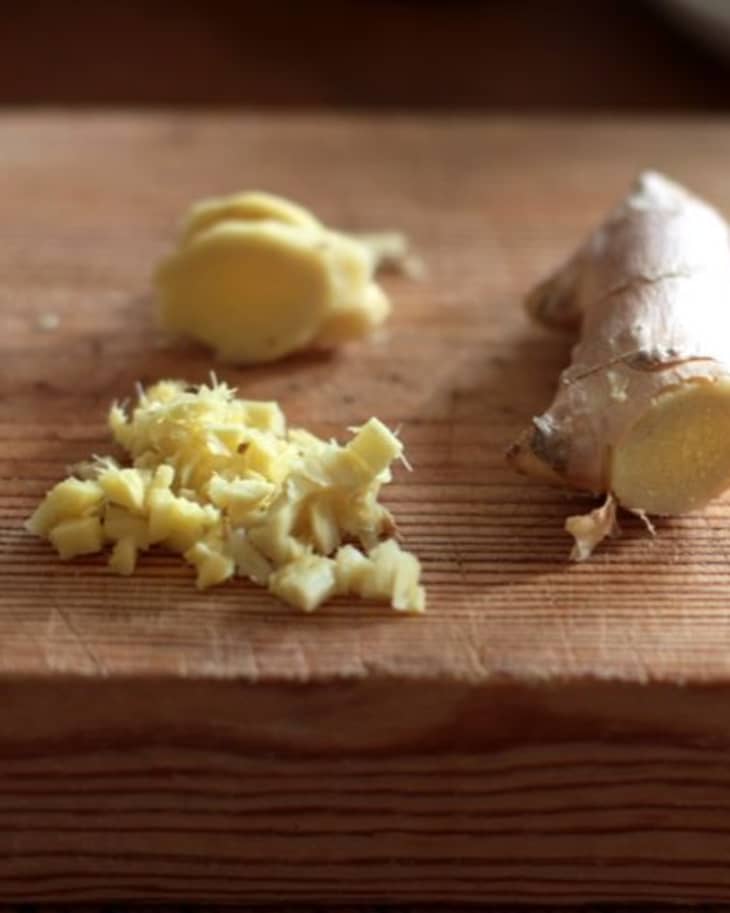
Fresh ginger is a staple in my kitchen. It is an extremely versatile ingredient that shows up in any course, from savory to sweet, be it main, beverage, dessert, or salad. It can even be medicine — hot ginger tea with lemon, honey and brandy will cure what ails you! In short, fresh ginger is essential to my cooking. Read on for my methods for peeling and mincing fresh ginger.
First, a side note: Fresh ginger is technically a rhizome but common parlance is to call it a root, so I will do so here.
What to Look for When Buying a Ginger
When purchasing fresh ginger, look for firm, moist roots that feel heavy for their size. There will often be a rough, dried patch where a section of the root was cut or broken off. No need to worry about that, but do not purchase if the root itself is dried and shriveled. If you are shopping for ginger and only need a small amount, it is OK to break off what you need (often recipes charmingly call for a ‘thumbs worth’ of ginger) but be sure that what you are leaving behind is desirable for the next shopper.
Storing Ginger
Ginger will be OK on your kitchen counter for a few days but if you want to store it longer, wrap it in paper towels and then in plastic and keep it in your refrigerator’s crisper. It can also be frozen if tightly wrapped in plastic. Many people peel and mince their ginger first before freezing it, for added convenience.
Where to Buy Ginger
Ginger does have a season, despite the fact that we see it year-round in most markets. Young ginger can be found in the spring, usually in Asian markets and should be experienced! It isn’t as strong as the older grocery store ginger. It has a fresh lively taste and a less fibrous texture, with hardly any skin so it doesn’t need to be peeled (see below.)
Ways to Mince Ginger
Fresh ginger doesn’t always have to be peeled, even though you will encounter this instruction in most recipes. If the ginger is young and the skin is very fine and clings to the root, or if it is going to be finely chopped and mixed in with many other things, you can skip the peeling step. Peel only when you have aesthetic concerns or if you’re chopping the ginger in a large dice and you don’t want the texture of the skin to be experienced.
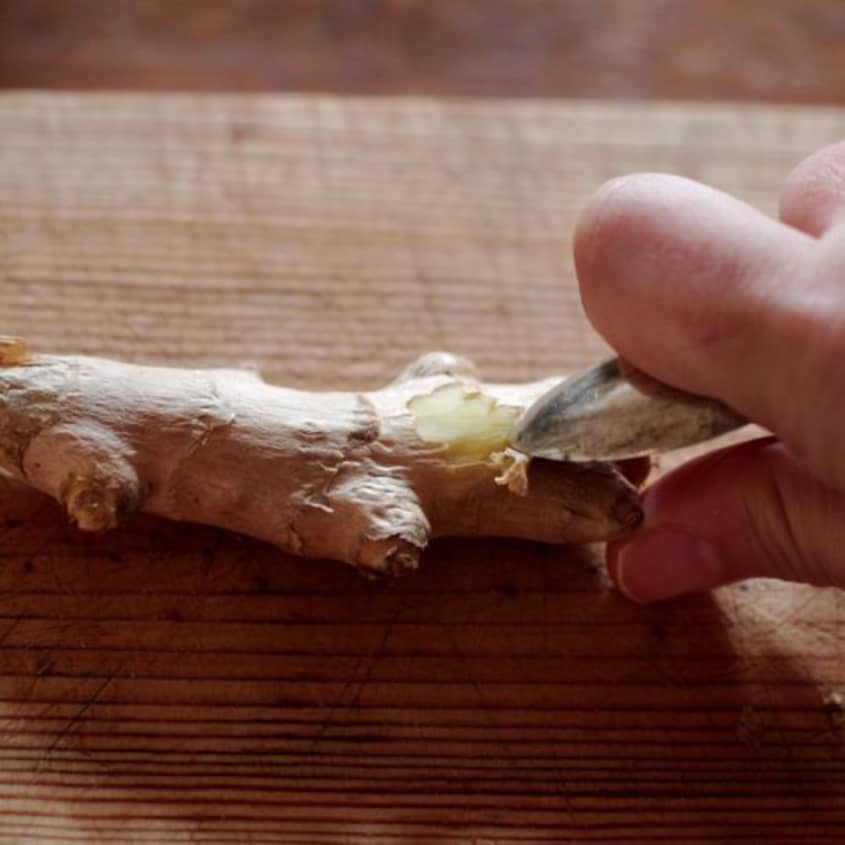
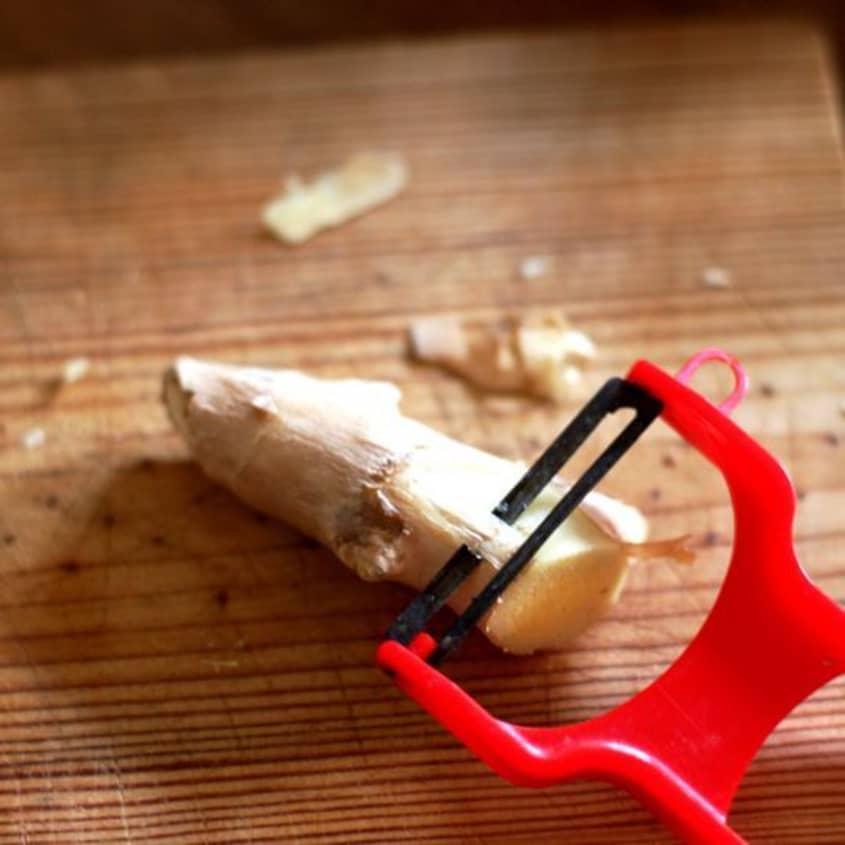
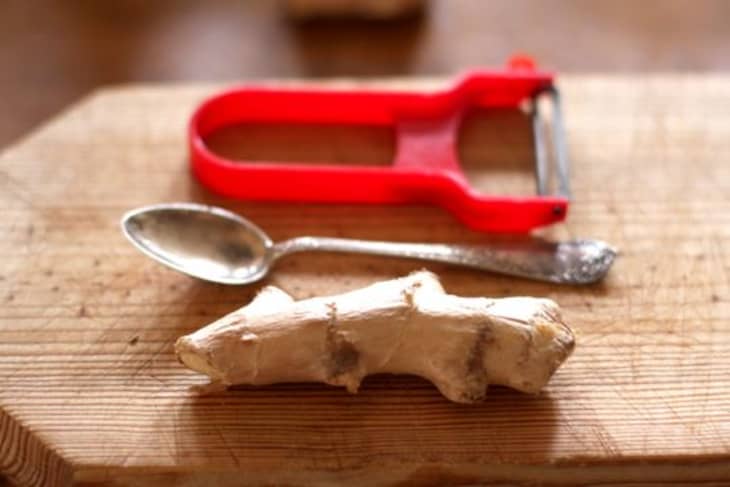
I prefer the spoon method for peeling ginger, but have included the peeler method as an alternative. I do not recommend peeling your ginger with a knife unless you are very skilled and dexterous with your knife. Even then you will take a fair amount of the ginger flesh along with the peel. The truth is, the spoon method will scrape off only the peel and is just as quick!
How To Peel and Mince Ginger
Nutritional Info
Ingredients
Fresh ginger
Equipment
Cutting board
Spoon, preferably one with a thin edge
Vegetable peeler
Large sharp knife
Instructions
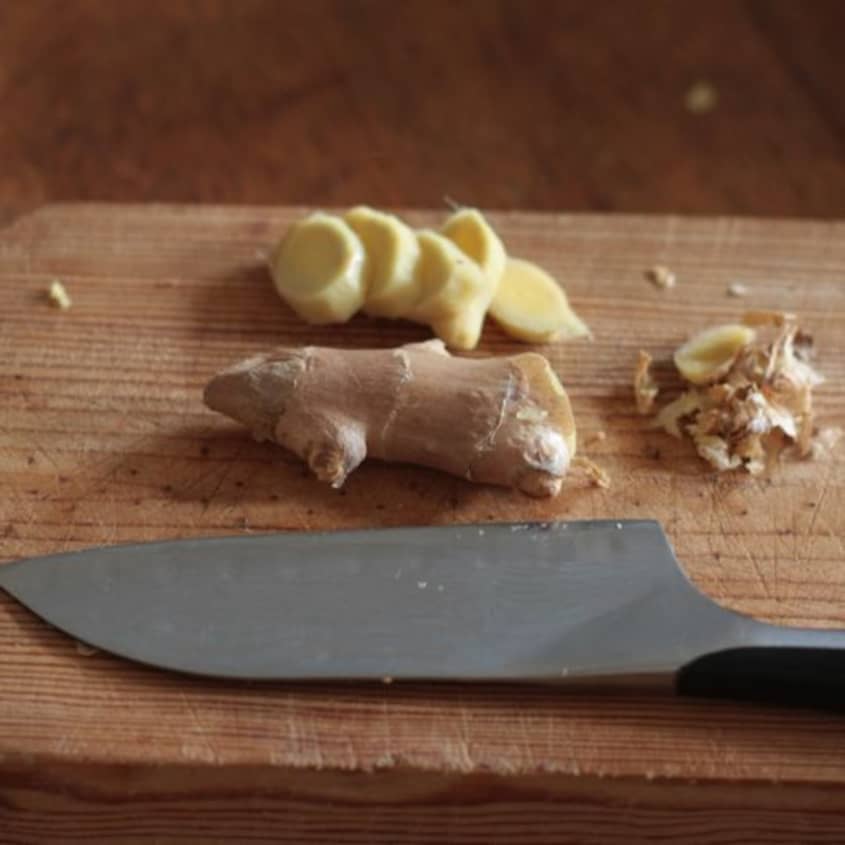
Peeling ginger with a spoon. Using the edge of the spoon with the convex of the bowl facing towards you, scrape away the ginger's papery skin using firm, downward strokes. You can anchor the root on a cutting board or hold it in your other hand, either will work. Scrape away as much as needed from the larger root (the rest of the root will give you a nice 'handle' to steady the process) or the whole piece if that's what's needed. The spoon will make it easier to work your way over and around all the little nubs. With a spoon, pretty much just the skin will be removed.
Peeling ginger with a vegetable peeler. In the same way you would use the spoon, peel the skin from the root. You will need a little more caution here as you can potentially cut yourself with the peeler and you will also notice that you are taking off some of the flesh. The peeler should be able to handle the bumps and nubs but again, use caution as this is the classic place to slip and cut yourself.
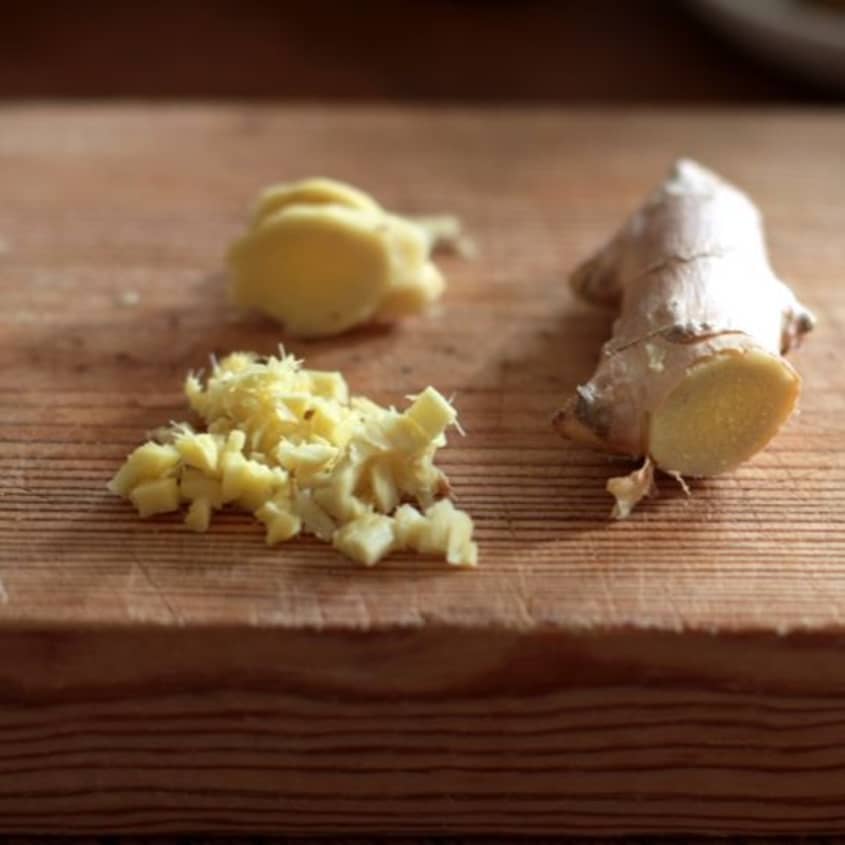
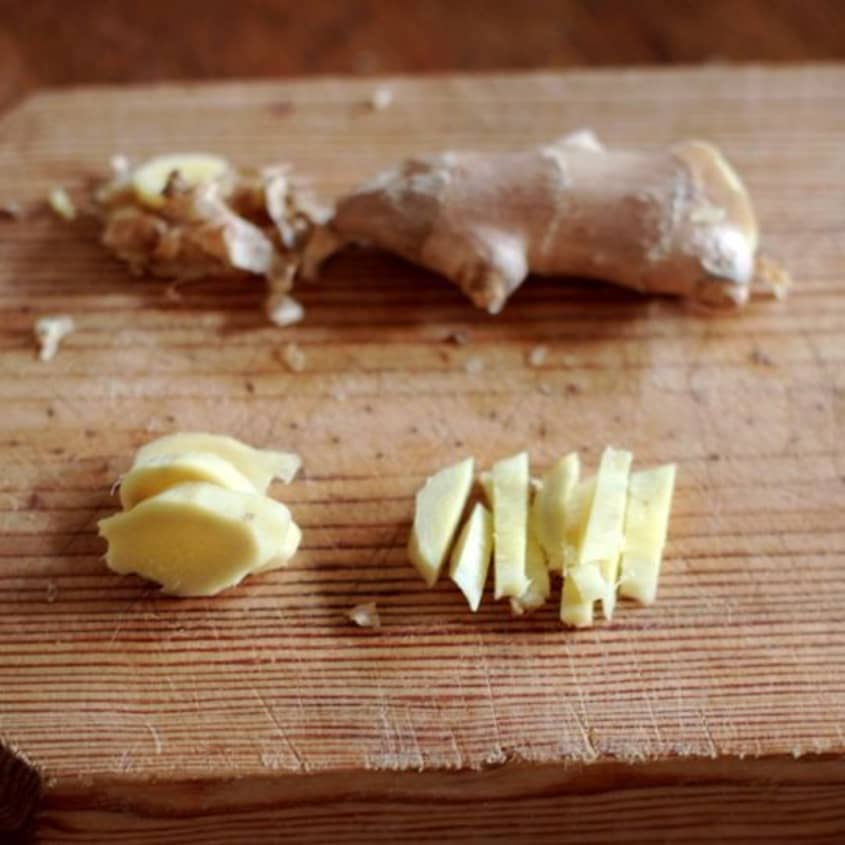
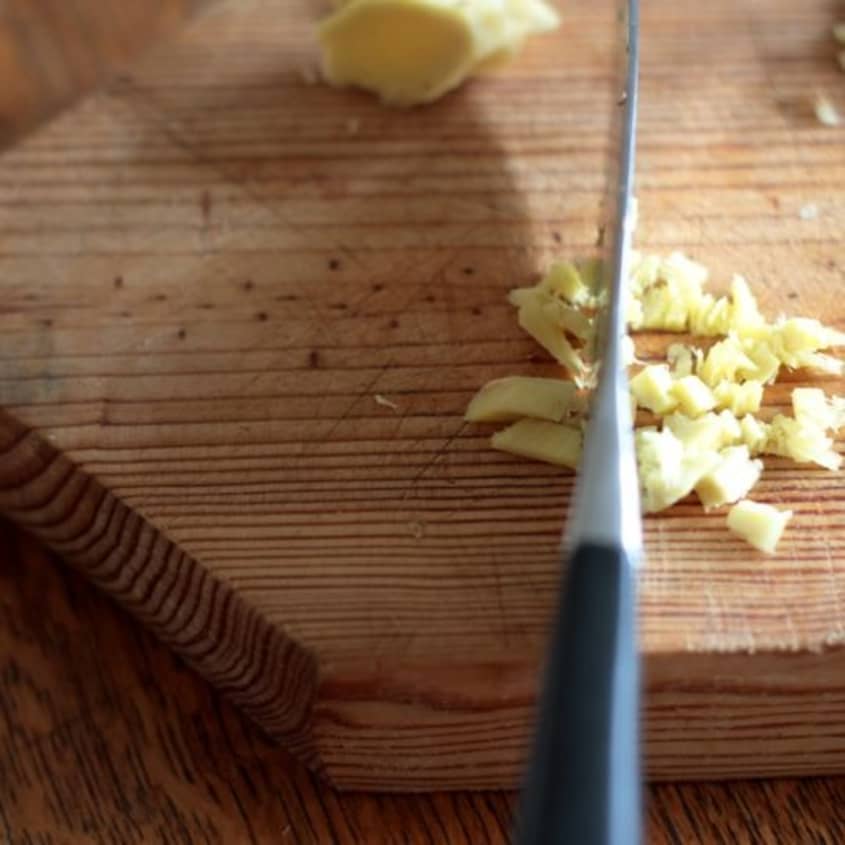
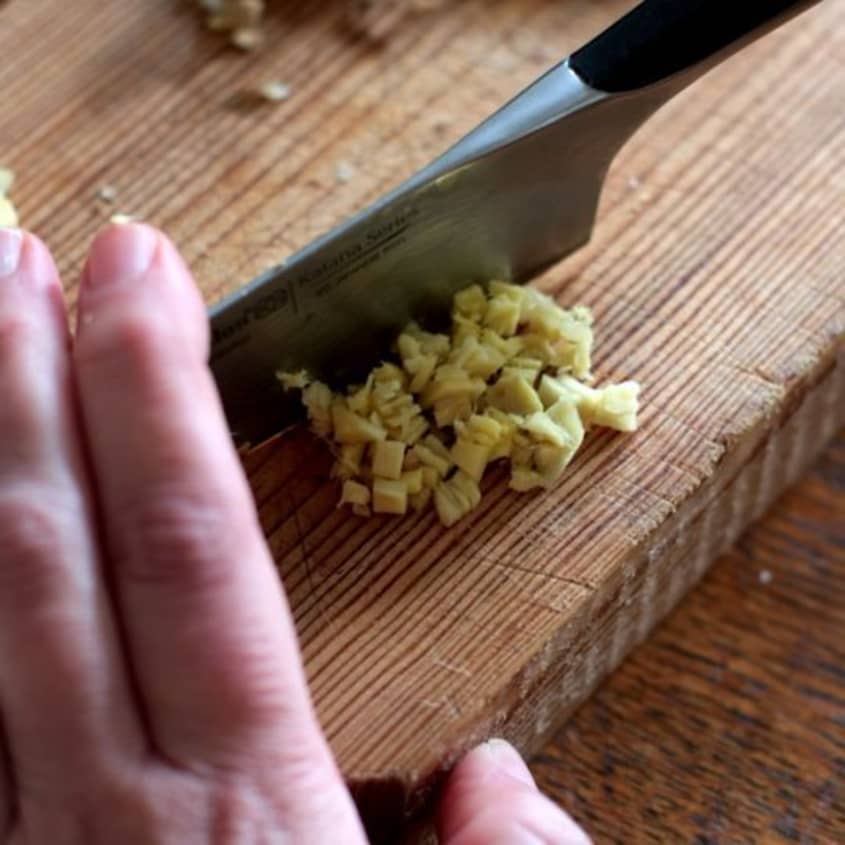
Mincing ginger by hand. Cut the ginger into coins. Using a large, sharp knife, cut the peeled ginger crosswise into coins. The thickness of the coins will determine how fine your mince will be: thinner coins will yield a finer mince. Cut the coins into matchsticks and then tiny cubes. Stack a few coins up. Do not make too high of a pile as the coins can easily slip when cutting and cause you to loose control of your knife. Cut the matchstick crosswise into a mince. Repeat with remaining coins.
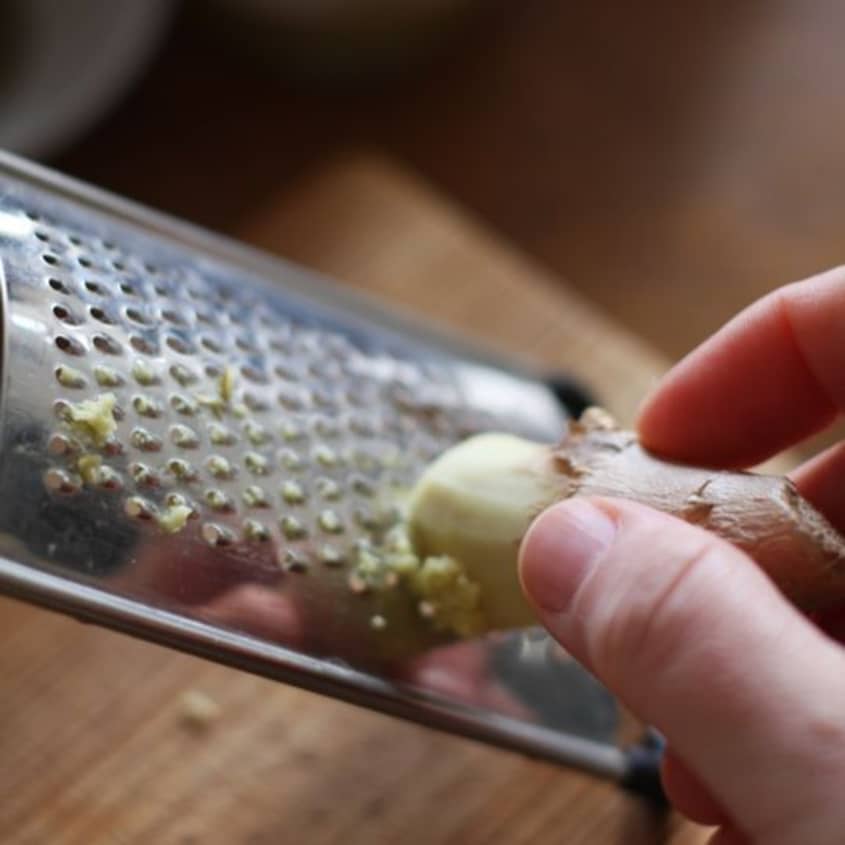
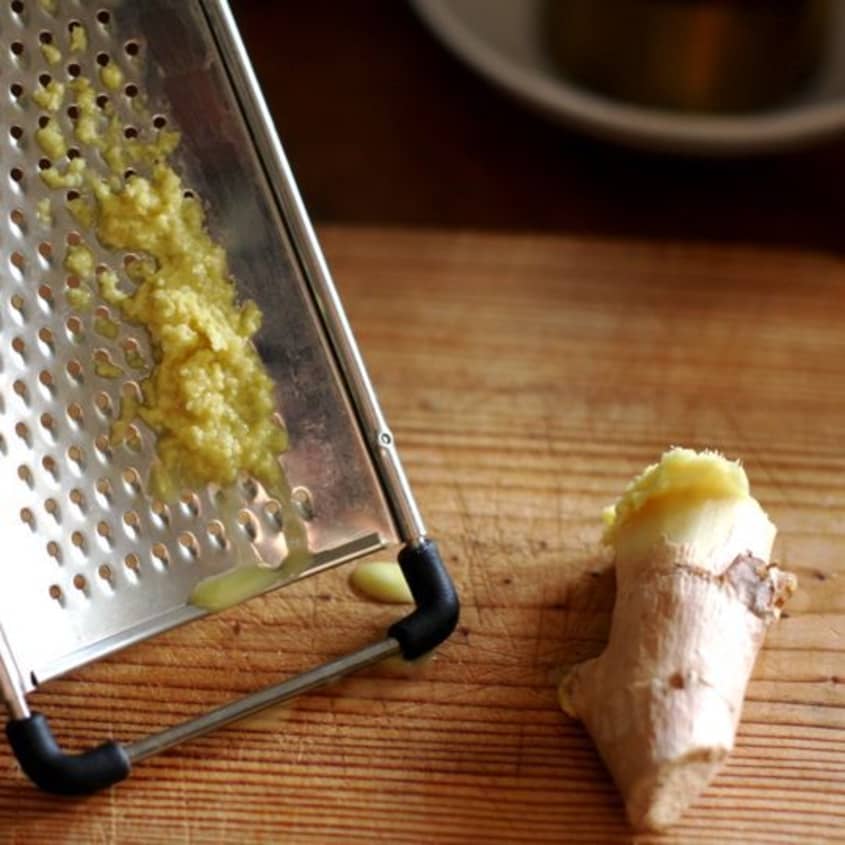
Chop again if needed. I sometimes take my knife and chop it while moving it through the whole pile to chop any bigger pieces that I may have missed the first time. This is sometimes called 'running your knife through.'Mincing ginger on the microplane. The microplane is an excellent tool if you want superfine, even pureed, ginger. It will often create some juice, so be sure to use it over a plate or bowl. Simply rub your ginger on the microplane using a fair amount of pressure, being cautious as you get to the end of your piece as you can easily scrape your fingers on its razor sharp surface. You may have to scrape the ginger pulp off of the back of the microplane or give it a firm whack to dislodge the ginger. This method and its results are similar to what you would get if you used a traditional asian ginger grater.
Want more smart tutorials for getting things done around the home?
We’re looking for great examples of your own household intelligence too!
(Images: Dana Velden)