
What’s the Difference Between Stock and Broth?
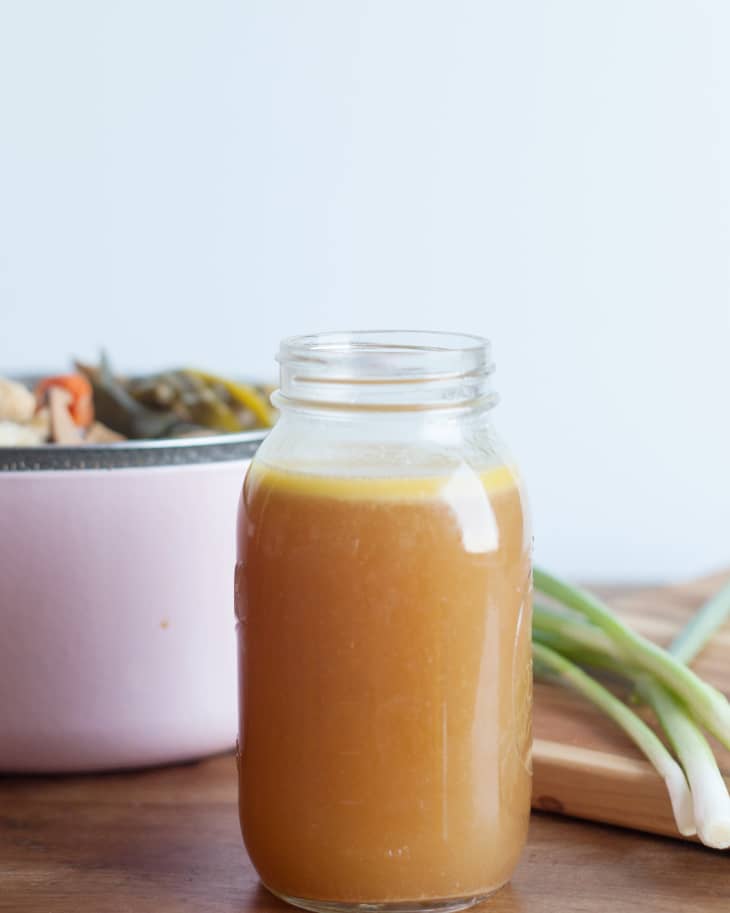
For years I assumed that “stock” and “broth” were interchangeable terms for the same thing: savory liquid flavored with vegetables, meat scraps, and bones, used as the base for soups, sauces, and other dishes. In fact, the process for making each of these liquids is quite similar. But it turns out there is actually a small but significant difference that sets stock and broth apart.

The Difference Between Stock and Broth
Stock and broth share a lot of similarities, but they are actually two different things. There are three important factors that differentiate stock and broth: the ingredients, cook time, and the presence (or lack) of seasoning.
What Is Stock?
Stock is made by simmering a combination of animal bones (which typically contain some scraps of meat), mirepoix (a mixture of onions, carrots, and celery), and aromatics in water. Stock always involves bones, although not necessarily meat. Often the bones are roasted first, which makes for a richer, more deeply colored stock, although this step is not essential to the process.
Stock is cooked for anywhere from two to six hours on the stovetop. This length of cooking means stock doesn’t typically yield a thick or gelatinous texture, nor is it likely to gel when chilled. Stock is always left unseasoned.
Stock is typically used for sauces, gravies, braises, stews, and soups, another many other recipes.
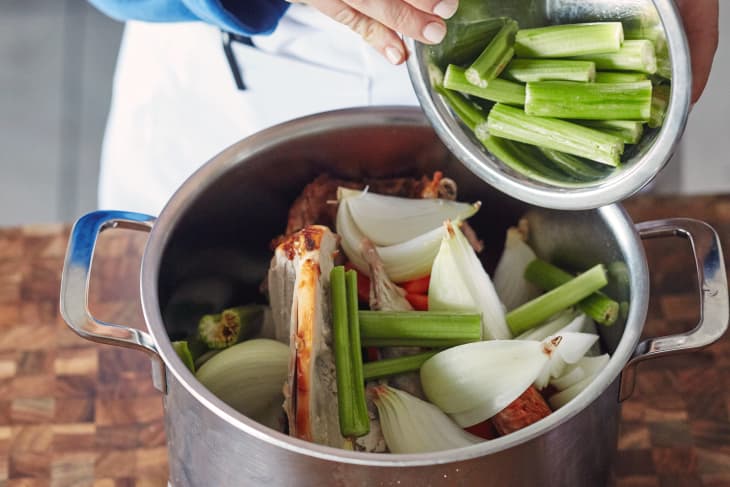
Make Stock at Home
What Is Broth?
Technically speaking, broth is any liquid that has had meat cooked in it. It is made my simmering meat (which can contain bones, but does not have to), mirepoix, and aromatics in water for a relatively short amount of time, usually under two hours.
Unlike stock, broth is typically seasoned. It finishes as a thin, flavorful liquid that does not gel when chilled, and is used in all the same ways you’d use stock, including soups, sauces, and braises. And since it’s seasoned, it is flavorful and delicious sipped on its own.
The easiest homemade broth: Poaching chicken breast with a mixture of aromatics and salt will leave you with a light and flavorful chicken broth — not to mention tender chicken ideal for salads and soups.
This post has been updated. Originally published January 2015.