apartment therapy changing the world, one room at a time


Quick Meal Technique: How to Stir Fry
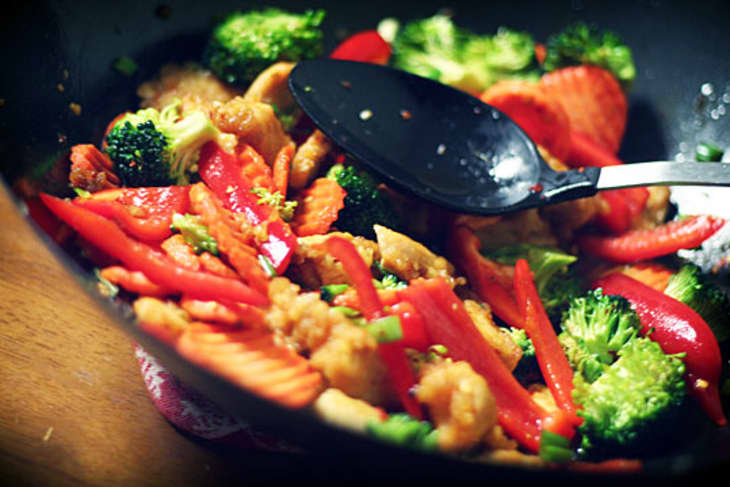
2009-09-09-stirfry2.jpgStir frying is really one of the best techniques we home cooks can have up our sleeves. Because they cook so quickly, you can have a stir fry on the table in about the time it takes to chop up the vegetables! Plus, stir fries are a great way to clear out the fridge and use up produce. Here's how we do it:


1. Start the rice or cook the noodles - Because the stir fry itself comes together so quickly, you don't want to be waiting on your side dish. Alternatively, make the rice or noodles ahead and add them as another stir fry ingredient!

2. Chop your vegetables - While your rice or noodles are cooking, get all the vegetables chopped. Cut them all about the same size and shape so they cook evenly. Make sure the vegetables are fairly dry; if they're too wet, they'll steam in the pan. Also prepare any aromatics, like ginger or garlic.

3. Heat the pan - Woks are great, but you don't necessarily need to rush out and buy one. Flat-bottomed skillets work just as well, especially with our western-style burners. Get the pan nice and hot over high heat before adding the oil. Canola or peanut oil are best.

4. Meat first, then vegetables - If you want meat or seafood in your stir fry, cook it first then scoop it out onto a separate plate before cooking the vegetables. You'll add the meat back in at the end.

5. Don't crowd the pan - If you have too much in your pan, the vegetables will steam instead of staying crisp. If necessary, cook in batches and then combine everything back together at the end. Cook dense vegetables like broccoli and carrots together and softer vegetables like onions and greens together.

6. Don't stir too much - You want to give your meat and veggies a chance to sear and develop flavor. Let them sit for 30-60 seconds between each stir, and they're done when they're no longer raw but still crisp. Until you're familiar with how each vegetable cooks, the best way to tell when they're done is by tasting them.

7. Add aromatics - You don't want the aromatics to burn, so add them at the very end and cook them just until they're fragrant. If you want a more deeply flavored dish, you can also cook the aromatics at the very beginning to infuse the oil, but move them to a separate plate while you cook the rest of the stir fry.

8. Add the sauce - The sauce can be as simple as a few shakes of soy sauce or as complex as a homemade barbecue sauce thinned with broth - or you can go with no sauce at all! The idea is just to coat the stir fry ingredients with flavor. You can make a thicker sauce by mixing a tablespoon or two of cornstarch into the sauce before pouring it onto the veggies. Let the sauce cook until it's thickened and glossy.

Do you like to stir fry? What other tips do you have?

Related: Playing with Your Food: How to Make Carrot Flowers

(Image: Flickr member ginnerobot licensed under Creative Commons)

Tags

Tips & Techniques, Ingredients - Meat, Ingredients - Vegetables, how to, stir-fry, dinner quick, stir fry, quick meals, basic technique

Share

Comments (7)

This is a great post--if you know the technique you don't need a recipe!

I always have a few things on hand and ready to go before I start stir-frying: a bit of salt, a bit of sugar, soy, and a kettle of water or some water in a glass.

Especially when I'm stirfying harder veggies like carrots or broccoli, after I fry the aromatics, I add the veggies and coat them with the oil and aromatics and let them sear. However, I always add a Tb. or two of water, a sprinkling of salt or soy, and smidge of sugar, and then cover the veggies for 30 sec. to a minute to steam, so they'll actually cook through. Then I uncover and add in veggies that are quick (asparagus, bok choy, greens, etc.) and finish the cooking that way. If anything ever sticks, I add a tsp. or two of water instead of sauce (too much black bean sauce or soy equals a lot of sodium), and then like you suggest, I add in the sauce towards the end of cooking.

It's also nice to add in a whole dried chile when you add in the aromatics in order to flavor the oil. And though I love black bean sauce and oyster sauce, they are very salty. So to avoid too much salt, rice wine, tamari soy, chiles, and mirin are all nice stir-ins for a sauce. And if you want some gloss or a thicker sauce, you can just use broth and a bit of soy with cornstarch.

Also, if you're going to stirfry rice, it's much better if it is a day or two old and cold from the fridge so the grains won't clump together.

posted by lotusmoss on September 9th 2009 at 11:25am
view lotusmoss's profile

Thanks for these directions. I find that I'm most likely to mess up preparation such as this that is so seemingly easy -- and in a lot of ways apparently: it seems that I set the heat too low, add sauce too soon, overcrowd the pan, stir too often.... oops

posted by akay on September 9th 2009 at 11:51am
view akay's profile

#1 tip is don't fear the heat. Have *everything* ready to go, get the heat as high as you can.

I use this technique to make stir fried rice (or noodles) as my favorite pantry clearer. I'm a fan of oyster sauce & soy sauce, together, and I always fry an egg or two (and remove it to add back in later) when I begin.

posted by Scott T. on September 9th 2009 at 12:06pm
view Scott T.'s profile

So how does one use the oyster sauce in jars from the supermarket? There's no real instructions.... do you thin it with water or just add it as is?

posted by That70sHeidi on September 10th 2009 at 3:58pm
view That70sHeidi's profile

Add oyster sauce as is. It gives saltiness and a little sweet, and color. A tablespoon or two is plenty for a stirfry of 2-4 servings.

posted by yenniet on September 12th 2009 at 2:54am
view yenniet's profile

This is a great post! But aromatics...examples?

posted by seldomyes on September 12th 2009 at 10:23pm
view seldomyes's profile

@seldomyes: Aromatics would be garlic, ginger, onion, or green onion, for example.

posted by lotusmoss on September 15th 2009 at 9:51am
view lotusmoss's profile