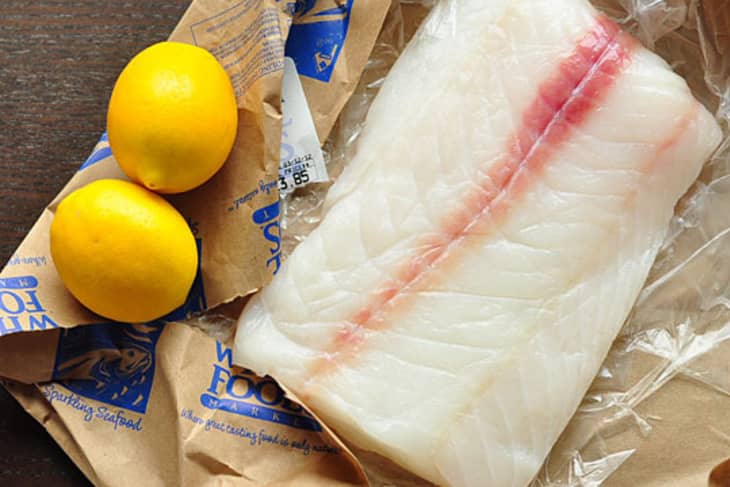
Open my freezer and you will see a stockpile of frozen fish fillets, chicken breasts, steaks, and sausage links. This is my saving grace during weeks when my meal plans go awry or I can't get to the store. Wrapped carefully against the cold, they are just as good after their time in the freezer as they were when purchased.
When packaging meats for the freezer, the most important thing is to protect them from exposure to air. Wrap meats very tightly in either plastic wrap or freezer paper, pressing the wrapping right up against the surface of the meat. Next, wrap another layer of aluminum foil around the meat or seal it inside a zip-top freezer bag.
Packaged like this, meat can be kept frozen for at least three months. After this time, even well-wrapped meats can start to develop freezer burn, though I've often cooked meat several months after freezing and found it to be perfectly fine.
The best and safest way to thaw meat is to place the frozen package in the refrigerator and let it thaw gradually. Small cuts will thaw this way in about 24-hours while larger cuts can take a few days. If you're rushed for time, small cuts can also be thawed in a bowl of lukewarm water under running water.
Two things not to do are thaw frozen meats on the counter or cook them straight from the freezer. Thawing on the counter is a safety risk since the outside of the meat will thaw — and start harboring harmful bacterias — long before the middle is usually thawed. Cooking frozen meat presents more of an aesthetic problem: the outer parts and the inner parts of the meat will cook at such different rates that the outside overcooks before the middle is done. (Though to the contrary, there is this method of cooking frozen steak!)
Any other tips for freezing and thawing meat to share?
Related: Fresh or Frozen Shrimp? Buy Frozen!
(Image: Emma Christensen)
Floral Drink Dispen...

Always thaw meats in cold running water.
I usually thaw under running water due to time constraints, but there have been many many many many times where i've thawed it on the counter (thats also how my mom has done it for 25 years) and none of us have ever gotten sick.
But hey, everyone is different and bodies reacts differently certain bacteria so I guess I'm just lucky.
We have a vacuum sealer and that has been awesome. If I'm thinking ahead of time, I put the meat in the fridge on a plate to thaw, but if not, we fill up the clean side of our double sink with cold water and let it sit for a couple hours... hasn't posed a problem for us yet.
I'm guilty of thawing on the counter too. I have granite counter tops and they thaw much faster when I put it there instead of running water.
That's how my mother taught me and so far knock on wood, we've never gotten sick off my cooking.
I actually just did this last night. We had some frozen tilapia vacuum-sealed in pouches. I submerged all of the fillets (still sealed in their pouches) in a large glass bowl filled with hot water (We're fortunate to have fairly hot water straight from the tap). I left them there for about 15-20 minutes and they were perfectly defrosted.
I removed the fish from the pouches, draining/dabbing off the excess liquid and seasoning with salt, pepper and a little paprika. I made small shells pasta, and steamed the fish on top of the cooking pasta for about 10 minutes. Mixed the fish and pasta with a sun dried tomato pesto and pasta and voila! We had a quick, easy and delicious dinner. Some salad on the side of course. :)
If the meat is sealed well, I put it in a bowl of water in the fridge. It thaws faster than if it's in the fridge with no water.
Actually, I always find that frozen items, especially fish and other less dense items, defrost much faster and more evenly in ice water than in warm water.
Why does it have to be running water? Thawing under running water just seems so wrong and so wasteful.
I freeze fish in a bag full of water - it seems to stay fresher that way...but maybe that's just an old wives' tale?
I often forget to take meat out early enough to thaw fully in the fridge, but usually have at least a couple hours. So I'm with jatoha, I put it in a well-sealed bag and then in a bowl of water (covered to keep it all completely submerged) in the fridge. Depending on the size of the cut it usually only takes around an hour or so. It's much safer than thawing at room temperature (which I personally don't want to risk), and less wasteful than running water.
I've really been debating getitng a vacuum sealer, since I seem to get a lot of ice crystallization (if not actual freezer burn) despite my best efforts...
What about thawing in the microwave? Mine has a setting called "auto defrost" where you can enter the pounds (or fractions thereof) of meat and hit start --- I use it for packages of Trader Joe's chicken sausage and it works great, but I've never tried it for other meats.
And . . . I just can't believe people thaw under running water --- do you just put your steak in the sink, turn on the tap and walk away? I can't imagine walking away from running water. That seems incredibly wasteful.
I am a counter-thawer and haven't gotten sick in many years of doing it this way, but perhaps I need to rethink.
I'm also a counter thawer - it's the way my parents did it, and none of us have ever gotten sick.
@rosaak I run the water until it doesn't turn cold immediately from the frozen product. Then I just leave it in the lukewarm water.
My question is refreezing. I know that you shouldn't refreeze thawed meat because bacteria can still form in the fridge, but when you refreeze it, doesn't the freezer's temps kill any bacteria that may have formed? I've done this many times and also haven't gotten sick (but realize quality of meat is not as good) but just don't know if I should take more precautions in the future.
I just wrote about this in my post today. My method works well for me but I'm not sure if others have been successful. I do waste more water, I suppose, but I only do it when I'm in a jam.
http://kouzmitch.tumblr.com/post/32269971619/how-to-thaw-chicken-in-an-hour
Another counter thawer here. If I'm in a jam, into the sink it goes covered w/faucet temp water after being unwrapped/rinsed. Ground beef is the only occasional exception, it gets nuked on defrost if I forget to leave it on the counter ahead of time. Only time I thaw in the fridge is approaching turkey day which takes way longer than 24 hrs for obvious reasons. Followed in the footsteps of my g-ma. Over half a century later, never been sick. The germophobes here crack me up.
Harold McGee publised an article about using a hot waterbath to thaw frozen foods:
http://www.nytimes.com/2011/06/08/dining/a-hot-water-bath-for-thawing-meats-the-curious-cook.html?_r=0
I tried it this weekend with boneless skinless chicken breasts. Worked pretty well and no one got sick.
As long as you are heating the meat thoroughly enough, shouldn't it kill any bacteria that grows on countertop thawing meat?
I thawed some chicken leg quarters on the counter yesterday and then roasted them at 350 for over an hour. They were delicious.
I would not do the same thing with something like steak or something you are intending to cook rare.
Freezing meat doesn't kill bacteria, it just halts the growth of it while frozen. So refreezing isn't terrible as long as the meat wasn't out for long before refreezing and used quickly after defrosting the second time.
thawing under running water - because the water is running it pulls the colder temperature of the frozen item away from it...remember when you try to defrost meats and things in water without it running and all your stuff clumps together and sticks? That's because in the beginning the temperature condenses at the 'wet' part and is not being drawn away.
There is a science to it that you can also find from reading Harold McGee, "On Food And Cooking". His book of food science.
The water running can be as small as a tiny stream before breaking down into drops...its no more wasteful than you leaving the water running while you are brushing your teeth.
The refrigerator and running water are legitimate food safety, ServSafe, health department approved ways of defrosting. CAN you defrost on the counter? Sure its your kitchen...but don't get caught doing it at a food place of business.