
Food Science: Why Bread Stales
Did you know that bread actually begins staling almost the minute it comes out of the oven? Yes, you can thank a little chemical process called “starch retrogradation” for this particular effect! However, there is a way that this process can be reversed – at least temporarily…
During baking, starch molecules in the raw bread dough begin to gelatinize at about 150°, meaning they absorb moisture, swell, and then become semi-firm. This is partly what sets the structure (or “crumb”) of the final loaf.
When the loaf comes out of the oven and cools to below the gelatinization temperature, the starch molecules reform and harden – starch retrogradation. The water that was absorbed during baking gets slowly expelled and eventually evaporates. Bread that was initially soft and moist becomes progressively harder and dry.
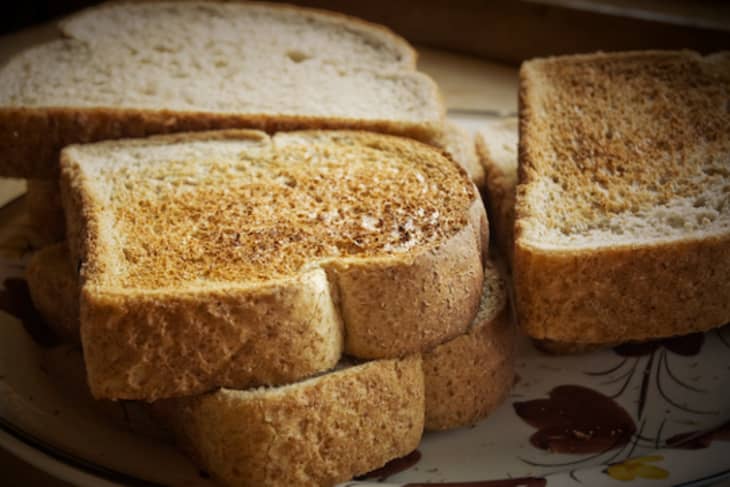
Starch retrogradation can be temporarily reversed by reheating loaves of bread in the oven or individual slices in the toaster. Reheating brings the bread back up to the gelatinization temperature and causes the molecules to reabsorb some moisture. As long as the bread isn’t too old or had too much moisture evaporate, this reheating makes the bread palatable again.
The staling process also happens more slowly in breads that are enriched with sugar, eggs, or dairy. The sugar helps to absorb and retain moisture while eggs and dairy both trap moisture and interfere with the retrogradation.
Freezing also prevents bread from staling. Bread can be frozen for several weeks and reheated in the oven with almost no noticeable difference in quality. On the other hand, staling happens very rapidly if bread is stored just above freezing, as in the refrigerator, so be sure to store your daily bread out on the counter!
What do you do with bread that’s gone stale?
Related Liking: Bread Bags from UMA
(Image: Flickr member Rene Ehrhardt licensed under Creative Commons)